Details
Tools:
Framer | Figma | Kit
Date:
2025-present
"For the first time, my digital presence felt fully aligned with the depth of my work."
Background
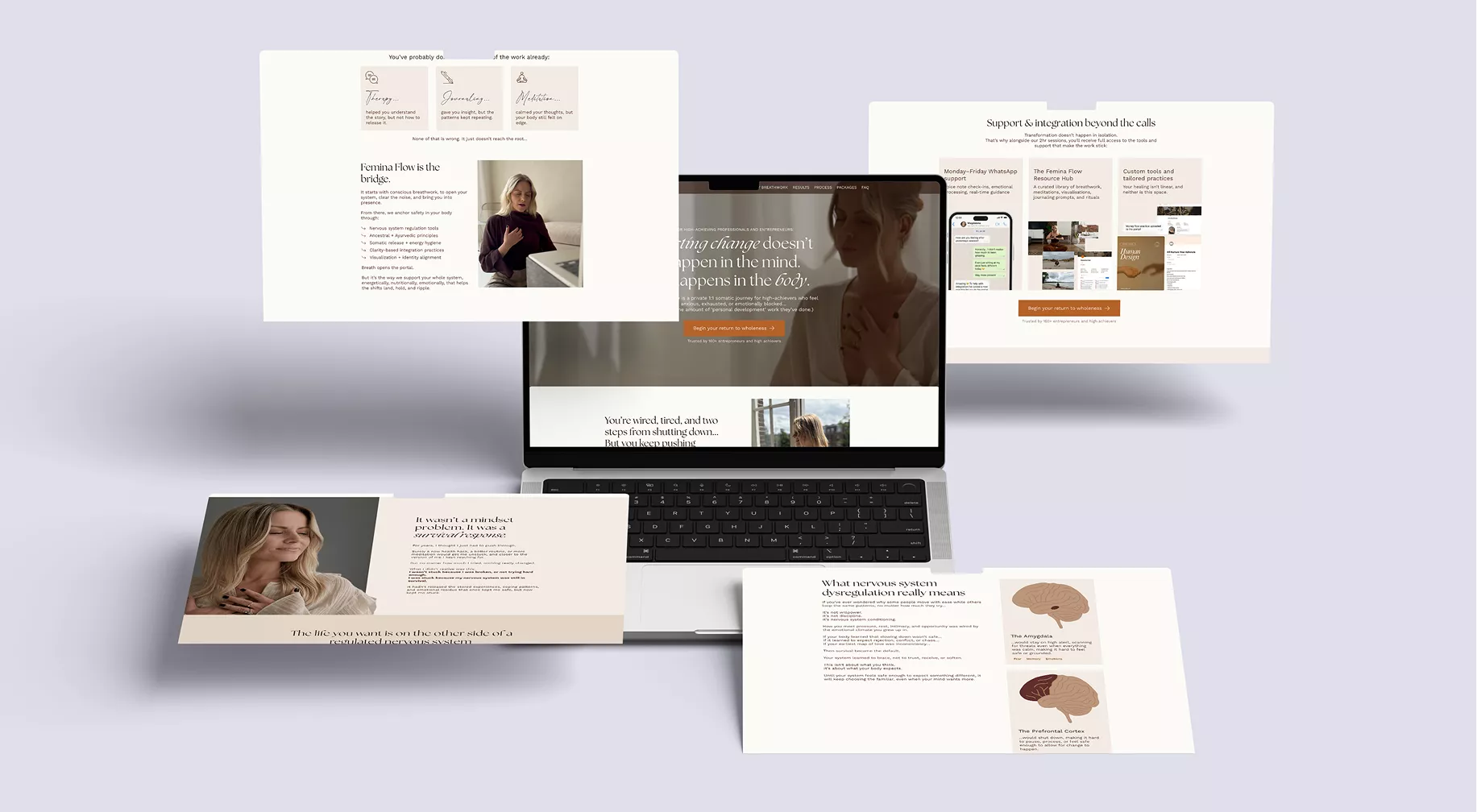
Femina Flow is run by Magdalena, a breathwork coach doing deep, nervous-system based work with high-achievers. Her content regularly goes viral and attracts a lot of engagement. People resonate with her message and her presence long before they ever land on a page.
At the top of the funnel, her content was already doing the heavy lifting. From there, people were invited into a free two-hour, group breathwork session. It was a full, immersive experience where people could feel her work in their bodies.
From that session, people could choose to continue working with her one-to-one inside a longer-term coaching programme.
The structure was strong. But the brand and funnel experience weren’t fully carrying that depth through.
The challenge
The core challenge was translation and coherence.
Magdalena’s work sits at the intersection of science and intuition. She studied cognitive science and combines breathwork with other modalities like ancestral nutrition, human design, and nervous system education. That blend is what makes her work unique.
But online, that story wasn’t being told clearly.
People didn’t fully understand what made her method different. The pages didn’t give enough context around the free session or the paid programme. And the brand didn’t clearly signal who the work was for or why it mattered.
On top of that, free events come with a practical problem. If people don’t show up, the funnel breaks. And while we briefly considered shortening the two-hour session to optimise attendance, it quickly became clear that one hour wouldn’t do the work justice. The depth would be lost.
So the real challenge became this:
How do we honour the depth of the work, explain it clearly, and build an experience that attracts the right people without watering anything down?
The approach
We started with brand strategy, not pages.
Before designing anything, we spent time exploring Magdalena’s story and how it connects to her work today. Her ideal client is essentially herself a few years ago, someone intelligent, self-aware, and curious, but disconnected from their body and overwhelmed.
We mapped her positioning around the bridge she creates between science and what’s often labelled “woo-woo”. Instead of choosing one side, we made that contrast part of the story. Her background in cognitive science allowed us to explain the work in a grounded, credible way, while still leaving space for intuition and lived experience.
We explored tone of voice, competitor positioning, ideal client psychology, and visual identity concepts. The goal was to create a brand that felt calm, intelligent, and trustworthy, without being clinical or overly spiritual.
From there, we rebuilt the ecosystem.
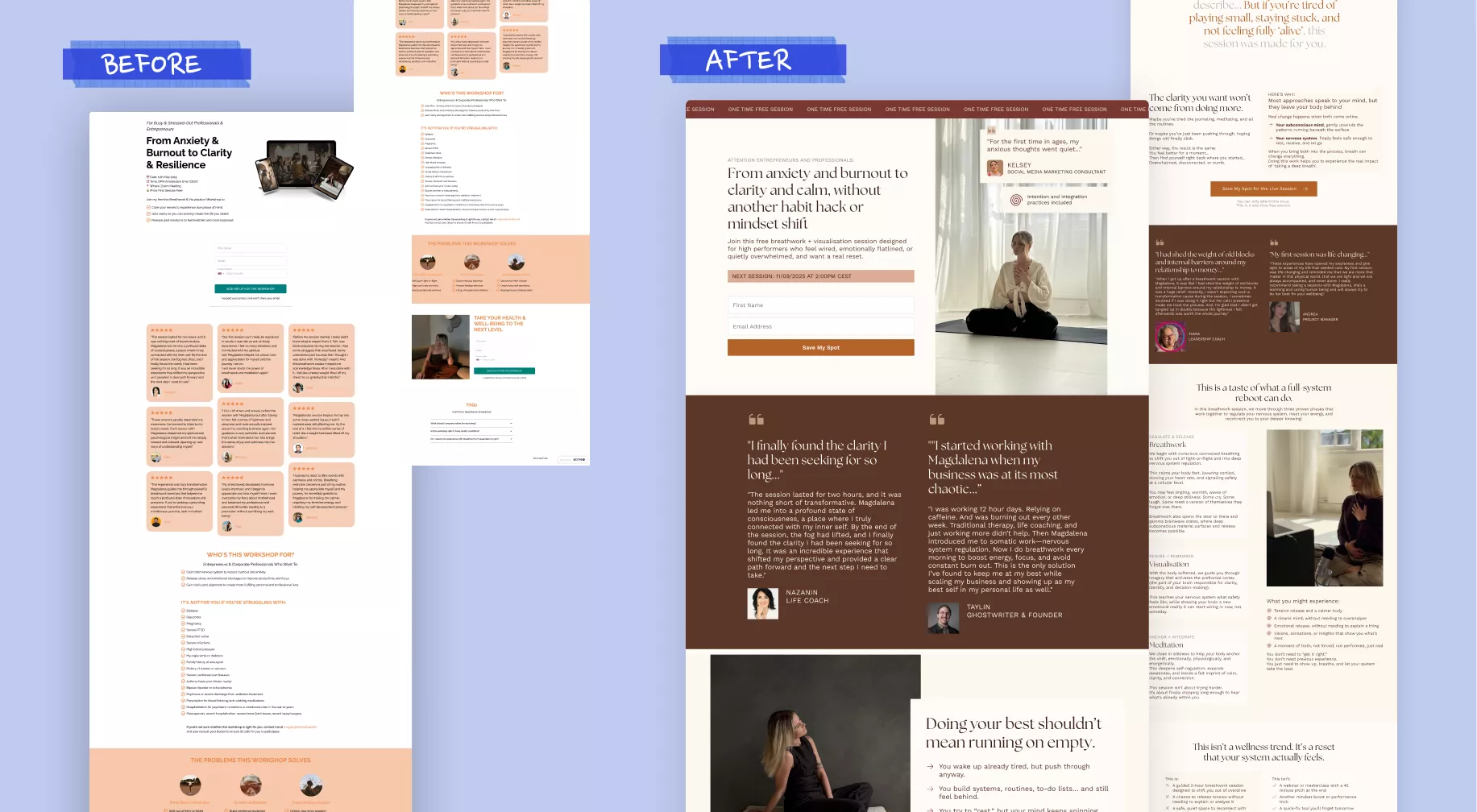
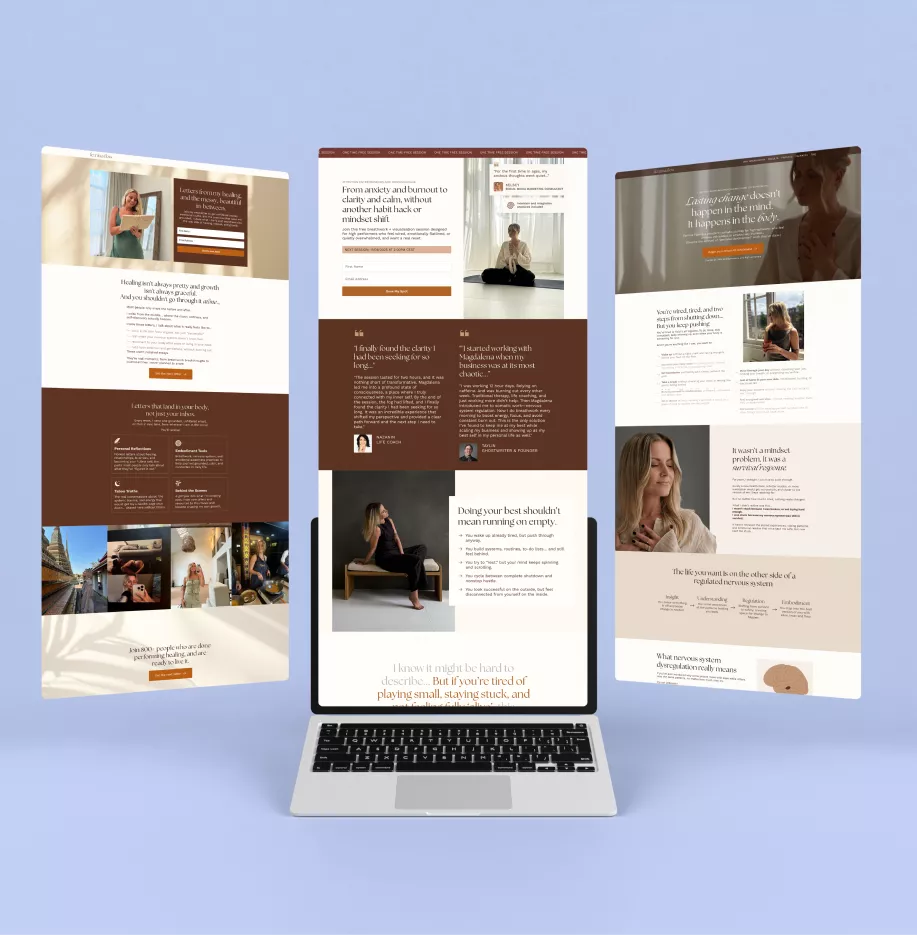
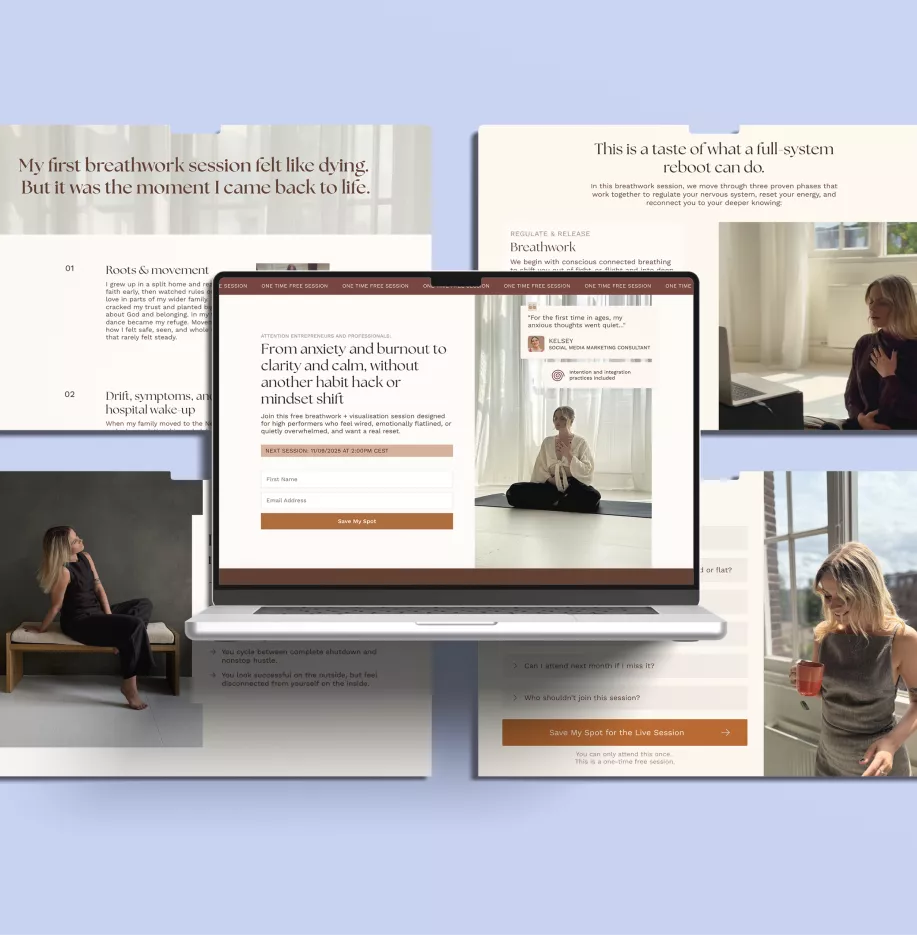
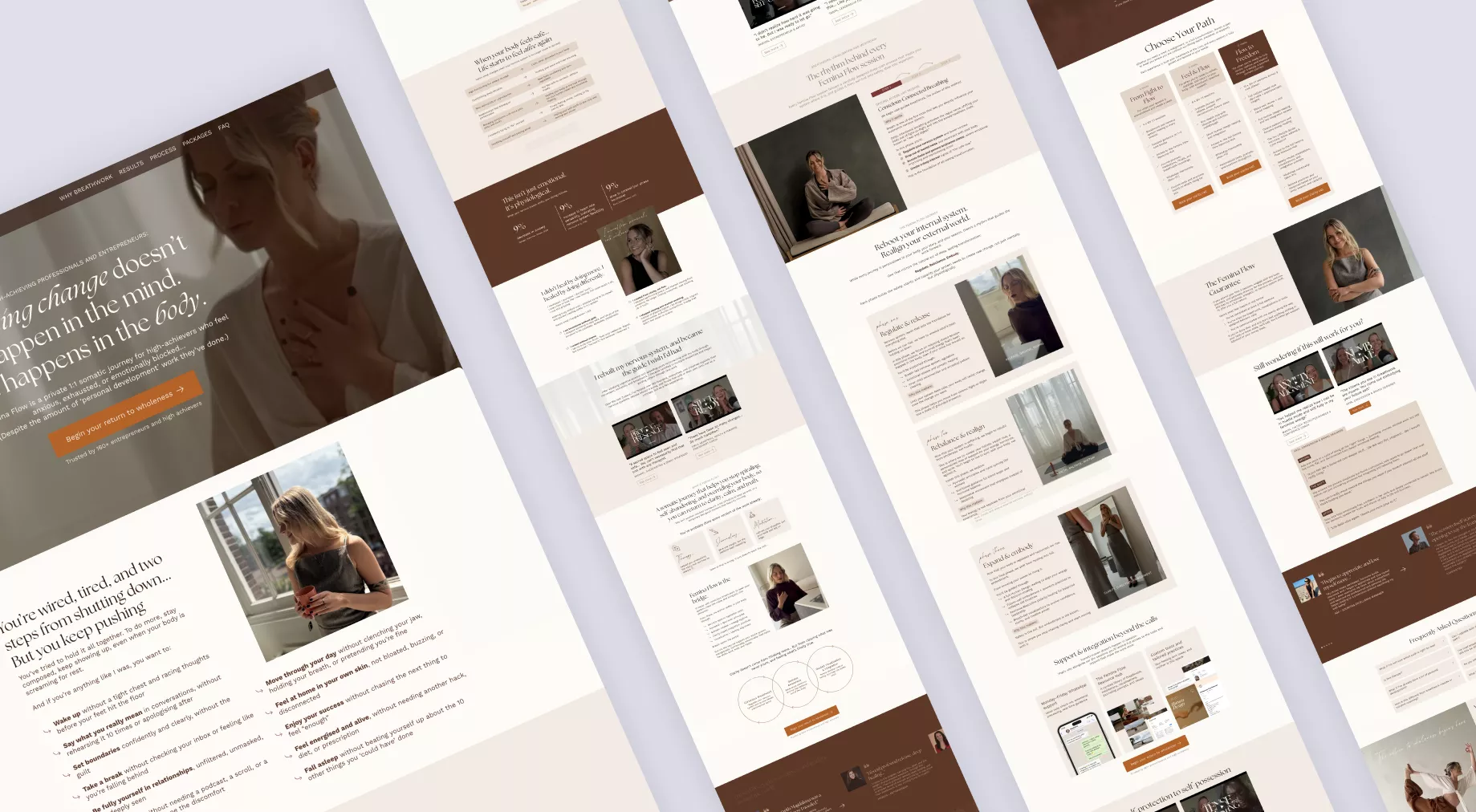
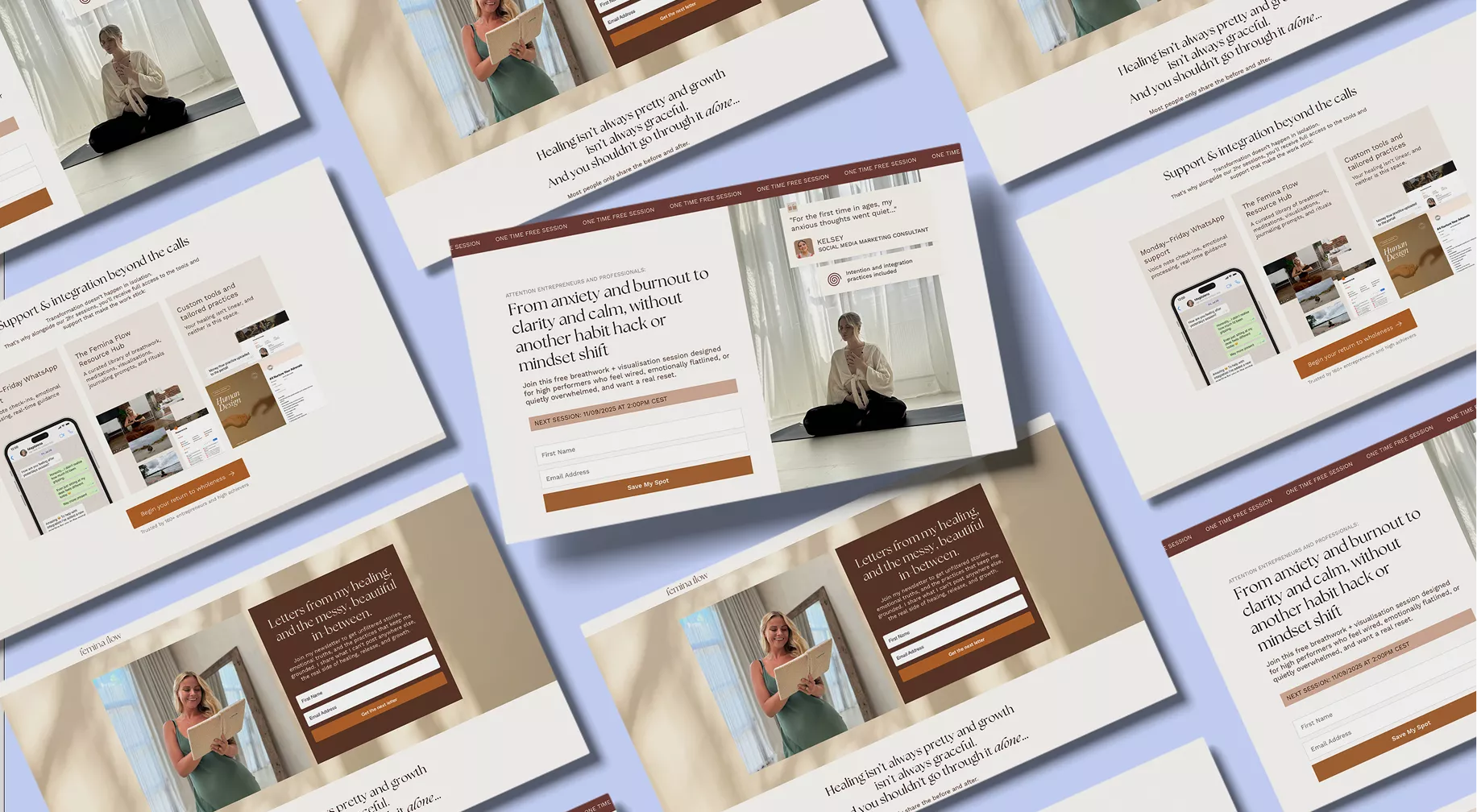
The landing pages were redesigned to give people proper context. We explained what happens in the free two-hour breathwork session, why it’s structured the way it is, and who it’s for. We also took time to educate people on her method, so they could understand what made it different before committing their time.
Because the free session is genuinely high value and could easily be paid, we positioned it as a one-time free experience. Once someone attends, they can’t attend again for free. This framed it as a true taster session and increased commitment and attendance.
To support show-up rates, we expanded the email sequences around the event. We added calendar integrations, more thoughtful reminders, and bonus practices to help people feel prepared and invested before they arrived.
Inside the paid offer, we restructured the programme. Instead of only offering a 12-week option, we introduced 8-week and 4-week pathways. This made the work feel more accessible, reduced the psychological barrier to entry, and still allowed people to extend later if it felt right.
We also revisited the newsletter strategy. Magdalena already sent weekly emails, but we leaned into more personal storytelling. Her background, her travels, and her everyday reflections became part of the content. This shift improved response rates and deepened the connection with her audience.
The newsletter sign-up page was redesigned to clearly set expectations and position the list as a resource. The short onboarding sequence segmented people based on their main struggles, such as stress, burnout, or anxiety, and delivered a complementary practice for each. This created early engagement and gave us meaningful data for future positioning.
Results
The entire experience now feels cohesive.
People arrive from content already warmed up. The brand gives them language and context. The free session feels intentional and valuable. Attendance has improved. And the paid programmes feel approachable without losing their depth.
Magdalena feels confident sharing her work and inviting people into her ecosystem. The funnel no longer feels like a marketing layer placed on top of her practice.
It feels like an extension of who she is and how she works.
She is now booked out, and the business feels more sustainable, aligned, and grounded.
Personal insight
This project was a good reminder that tactics don’t work in isolation.
In spaces like this, optimisation doesn’t always mean making things shorter, faster, or easier. On paper, a two-hour free session isn’t a “quick entry point”. But in reality, it’s where the best clients come from, because people get to truly experience the work before committing.
We could have shortened the session. It might have increased sign-ups. But it would have reduced depth, and depth is the point.
The same applied to the pages. Traditional direct response structures focus heavily on pain and urgency. In this context, that would have done real harm. These are not problems to be poked at aggressively. People don’t need to be pushed into feeling worse so they act. They need to feel supported, informed, and inspired.
So the structure of the pages was different. There was more education. More context. More space to understand the method and the process. The goal wasn’t to create emotional intensity. It was to create emotional safety.
This is also a space where hard scarcity and artificial urgency don’t belong. People need to trust their own timing. When the experience respects that, the right people move forward, and the work stays clean.
That’s the kind of optimisation that actually matters here.
Convert Impact | 2026